Skip to content

Month: April 2021

  • Make It Lean Contest – Interview: Juriverse

    Make It Lean Contest – Interview: Juriverse

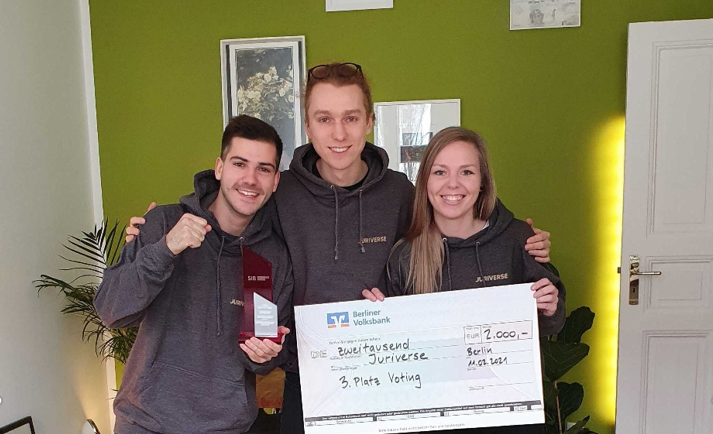
    Juriverse has won third place in the Make It Lean Contest 2020/21 and a prize of €2,000!
    Their idea? A platform for free learning materials in law school that students need to optimally prepare for exams and with which authors can earn money.
    Juriverse identified a problem in their environment, tackled it, and want to solve it — this is exactly the kind of mentality we love to support, including through our Startup Now Programme! But how did it all come about, and what else does the Juriverse team have planned? We asked them…

    1) How did you find out about the Make It Lean Contest?
    We became aware of the Startup Incubator Berlin through our consideration of applying for the Berlin Startup Scholarship. That’s where we then also discovered the Make It Lean Contest.

    2) How and when did you come together as a startup team?
    Marvin and Laura have known each other since school. Lucca became a good friend and is now a co-founder through CODE University. So we have all known each other for several years and make a strong team. We also bring together the necessary skills. Laura takes care of legal topics and operations, Lucca handles the technical side, and Marvin looks after product management. We are additionally supported by great legal professionals from across Germany and a network from the startup industry.

    3) How did you come across the problem that you want to solve with your startup idea?
    Laura is herself a law student, so we have our user persona right within the team. When she told us one day about her challenges in law school, we took a closer look at the topic and saw great potential for innovation there. In the meantime, user interviews with law students and conversations with professors have confirmed that there is indeed room for improvement in this area.

    4) What is your most important goal in the next 3 months?
    To make law school less daunting and stressful for law students through our initiatives and materials. In law school, it’s not just about access to the right materials. Above all, it’s about conveying knowledge of how students need to work with the relevant materials — combined with feedback on students’ own solutions.

    5) Who would you like to have a coffee or tea with? Why?
    With investors who ideally have a legal background, or lawyers who are looking for a passion project and want to support it.

  • Erasmus+ Project “EQUALdigitalent”

    Erasmus+ Project “EQUALdigitalent”

    The Erasmus+ project “EQUALdigitalent – Gender Equality in Digital Entrepreneurship“, in which the Berlin School of Economics and Law (HWR Berlin) participated as a project partner from 2016 to 2019, has been recognized with an award.

    (Excerpt from questions, compiled by Prof. Dr. Barbara Eisenbart, Prof. Dr. Heike Wiesner, Prof. Dr. Johannes Kirch, Prof. Dr. Matthias Tomenedal and Judith Schütze.)

    What award is it: “Lead Project 2020”
    Every 6 years, particularly successful Erasmus+ projects are recognized by a jury of the organization AIBA, which accompanies Erasmus+ projects as the national agency in Liechtenstein.
    The project was carried out by four international project partners from Liechtenstein, Austria and Germany from September 2016 to August 2019 in close cooperation: University of Liechtenstein (project lead), Berlin School of Economics and Law, Catholic Social Academy of Austria, and the Vienna University of Economics and Business.

    Who from HWR Berlin was involved? In what capacity / with what responsibilities?

    • Project lead (during the project’s duration: Project lead/coordination: University of Liechtenstein). Today: Prof. Dr. Barbara Eisenbart, Guest Professor for Business Informatics, with a focus on Innovation and Digital Entrepreneurship, Department of Dual Study Programs in Business and Technology
    • Project partner HWR Berlin:
      • Dr. Heike Wiesner, Professorship for Business Information and Communication Systems, Business Informatics degree program; Research focus: Participatory Software Design; Transformative Technologies & Diversity/Gender (module responsibility), formative evaluation, among others.
      • Dr. Matthias Tomenendal, Professorship for Management and Consulting, Director of the Berlin Professional School; Module responsibility Digital Business Management & Leadership, evaluation, among others.
      • Judith Schütze (research associate)
      • Johannes Kirch (research associate during the project’s duration). Today: Prof. Dr. Johannes Kirch, Professorship for Human Resources Management & Corporate Leadership (bbw Hochschule Berlin)

    What was the project “EQUALdigitalent – Gender Equality in Digital Entrepreneurship” about?
    What was the starting point – what was the goal?
    The main objective of the ERASMUS+ project “Gender Equality in Digital Entrepreneurship” (EQUALdigitalent) was to develop a gender-sensitive, interdisciplinary master’s degree program “Gender Equality in Digital Entrepreneurship” and, within that framework, to also develop and test new transdisciplinary teaching formats. Furthermore, the aim was to highlight and sustainably strengthen the importance of women in the field of entrepreneurship.

    What results did the research project achieve? (Development of a master’s degree program, others?)
    In addition to raising awareness of the (international) topic of “women and entrepreneurship,” HWR Berlin developed new transdisciplinary teaching and learning formats within the scope of the project, partially tested and formatively evaluated them.

    What specifically distinguishes the master’s degree program you developed from other degree programs/program concepts? What is innovative/special about the new master’s degree program?
    The gender perspective was continuously integrated throughout all developed and tested modules. All modules thus contain a direct engagement with the topic of gender. Here, rather than offering — as is often customary — a standalone module on gender separated from the other content, it was consistently implemented in every module as an essential component. This expanded perspective thus enabled an inter- and transdisciplinary approach that analyzes digitalization as an activity in an actor-specific manner and extends it in a design-oriented way under the aspect of gender.
    The piloting of special blended learning and in-person offerings in this context carries a high degree of innovation and relevance, and enables future cross-institutional collaborations in the area of teaching as well.

    What is the name of the new degree program: Digital Entrepreneurship?
    The Berlin Professional School is currently developing a Master’s degree program in Business Management – Digital Business Management, which qualifies graduates for management positions in startups as well as international companies and organizations. Content and results from the research project are also being incorporated into the “Digital Entrepreneurship” module.

    How and why does this new degree program fit into HWR Berlin’s portfolio?
    Internationalization, digitalization and diversity are part of HWR Berlin’s mission. Each individual institution and institute involved is free to sustainably implement parts of the degree program. The relevance of the topic is self-evident: although a slight increase in the proportion of women in the startup sector has been consistently observed for several years, they remain overall significantly underrepresented. Currently, the share of female founders stands at only around 15% (cf. Hirschfeld, Mütze & Gilde, 2019, p. 7).

    When is it set to launch with us?
    Starting in autumn 2021, the Master’s degree program in Business Management with a focus on Digital Business Management is scheduled to launch at the Berlin Professional School. In addition, a cross-faculty module “Digital Business” for various bachelor’s degree programs is being developed for spring 2022.

    What does the award mean to you and your team, what does it mean to be among the “Best of” ERASMUS+?
    The award demonstrates the relevance of transdisciplinary knowledge in the academic context. The intersection of digitalization, entrepreneurship and gender offers a genuine opportunity to address the digital society in an entirely new way. In particular, the continuous integration of gender aspects with regard to digitalized entrepreneurship proved to be highly significant. The submission of future research projects will certainly be supported by this positive track record.

  • Curtain up for the “JumpStart” format!

    Curtain up for the “JumpStart” format!

    The Startup Incubator Berlin (SIB) offers with its new format JumpStart an entry point for realizing founding ideas in the pre-founding phase. The SIB’s state-of-the-art Prototyping Labs are also involved, where initial prototypes can be developed. This process is further supported by accompanying coaching.

    To also enable the development of technically complex ideas, founders are connected with experienced partners from business and research, thereby initiating valuable startup collaborations at a very early stage. The JumpStart format thus acts as an enabler within the Berlin innovation ecosystem and promotes the co-creative development of forward-looking innovations.

    Curious already?
    On April 22, 2021, from 4:00 PM to 7:00 PM, the official Kick-Off Event for JumpStart will take place!
    As founders, you will learn in this online event how to develop ideas within specific innovation clusters, or how to cooperate with our startup teams as a business partner or sponsor.
    An informational segment will be followed by a discussion round with the opportunity to ask questions.
    More information and the option to register: Kick-Off Event “JumpStart”

  • 5 Questions for… Aam Digital

    5 Questions for… Aam Digital

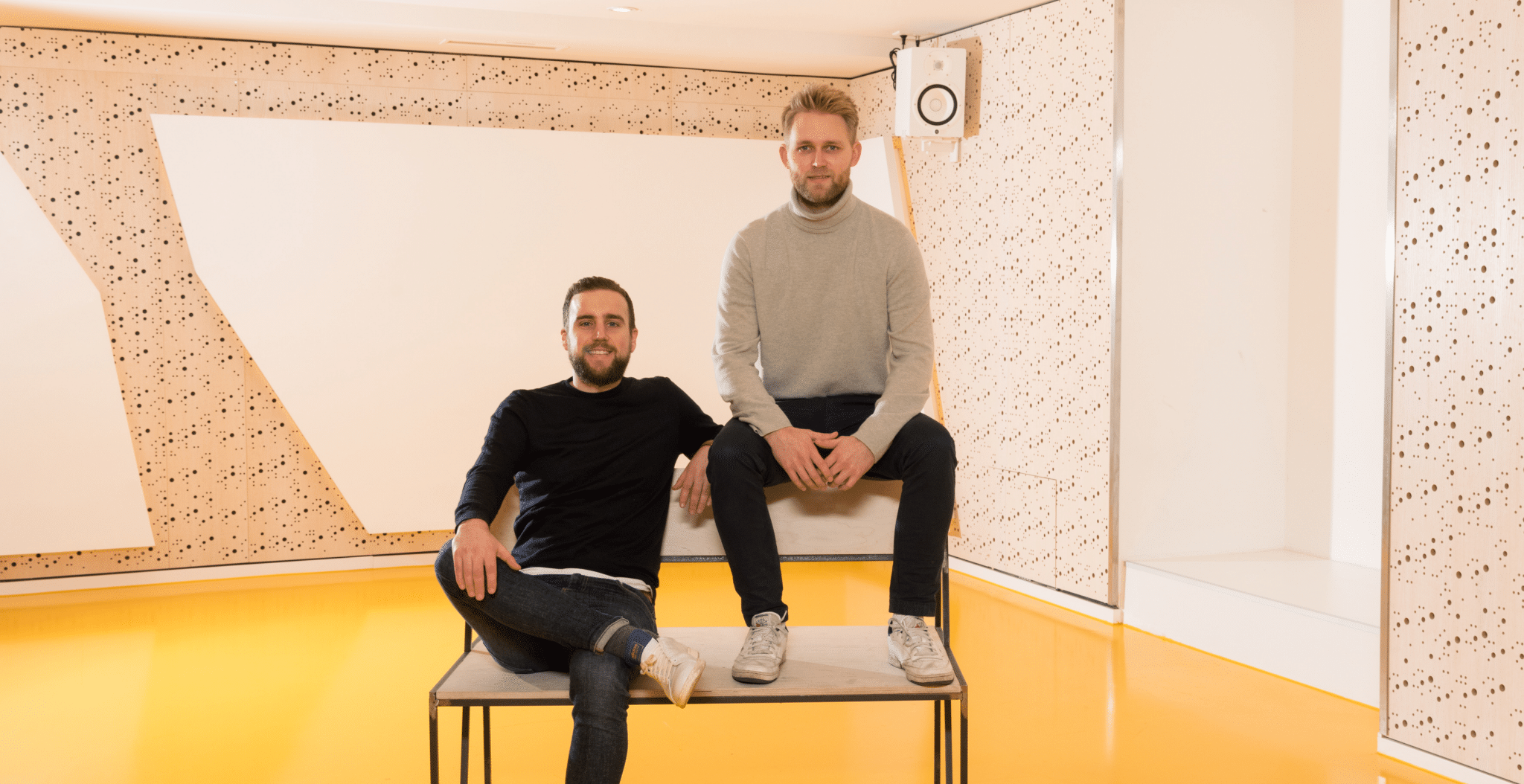
    Aam Digital has been part of the Startup Incubator Berlin since 2021 and is supported by the Berlin Startup Scholarship.

    Aam Digital is a social enterprise that has developed software for the global social sector. This enables social projects to work more effectively while simultaneously generating reliable data for monitoring and evaluation. Aam Digital can be adapted to any use case in the social sector and is currently actively used in social and educational work. Through their software-as-a-service model, they enable even organizations with limited financial resources to work more effectively and impact-oriented.

    We asked the founders 5 questions to find out how they came up with their wonderful idea, how they found each other as a team, and more…

    1. How and when did you come together as a startup team?

    Sebastian brought Aam Digital to life as an open source project during his time as a project manager in Calcutta, where he met our co-founder Simon. When the decision was made to build a social enterprise, Moritz came on board — he had just finished his master’s degree in London and has a professional and academic background in development cooperation. As a result of our great collaboration with the company TolaData, we were also able to bring Malte on board. Malte has founded and supported successful social enterprises on three continents and accompanies Aam Digital GmbH as an advisor and co-shareholder. We have been working since summer 2020 on our plans to advance the global nonprofit sector with our social enterprise. Since the founding of Aam Digital GmbH in March, it is finally official.

    2. How did you come across the problem you want to solve with your founding idea?

    During our activities in the NGO sector, we noticed that most people today unlock their phones with a fingerprint, yet work in the global social sector is mostly still documented analogously or in self-built Excel systems. This results in critical cases often going undetected, and reliable data for monitoring and evaluation being absent. The potential to increase effectiveness in the sector is enormous, and yet there is a mismatch between the need for digital tools and the supply — that is what we want to change!

    3. What do you want to/can you do better than other providers on the market?

    “Too complex, too expensive, the servers are not in Europe.” That is how our customers describe our competitors. Aam Digital is the opposite: simple, affordable, and GDPR-compliant. Also crucial is our self-image as a social enterprise: unlike publicly listed CRM systems, we share the objectives of our customers and always keep all stakeholders in view. This is not just lip service, by the way — it is part of our articles of association!

    4. What is your most important goal in the next 3 months?

    Our most important goal is to find business partners who want to work with us to make the global social sector more effective and transparent. We are looking for companies with complementary products, new customers, and compelling impact investors. While we are already generating revenue, there is still a lot to do before we achieve our desired social impact.

    5. Who would you like to have a coffee or tea with? Why?

    There are quite a few in the field of social entrepreneurship: High on our list would be Bill Drayton, the founder of Ashoka and one of the pioneers in promoting social entrepreneurs. With Aam Digital, we want to not only be economically successful but also advance society. But to achieve more, we also need partners and investors for that. Ashoka has built an impressive network in this regard.

  • Make It Lean Contest – Interview: UrbanFarm

    Make It Lean Contest – Interview: UrbanFarm

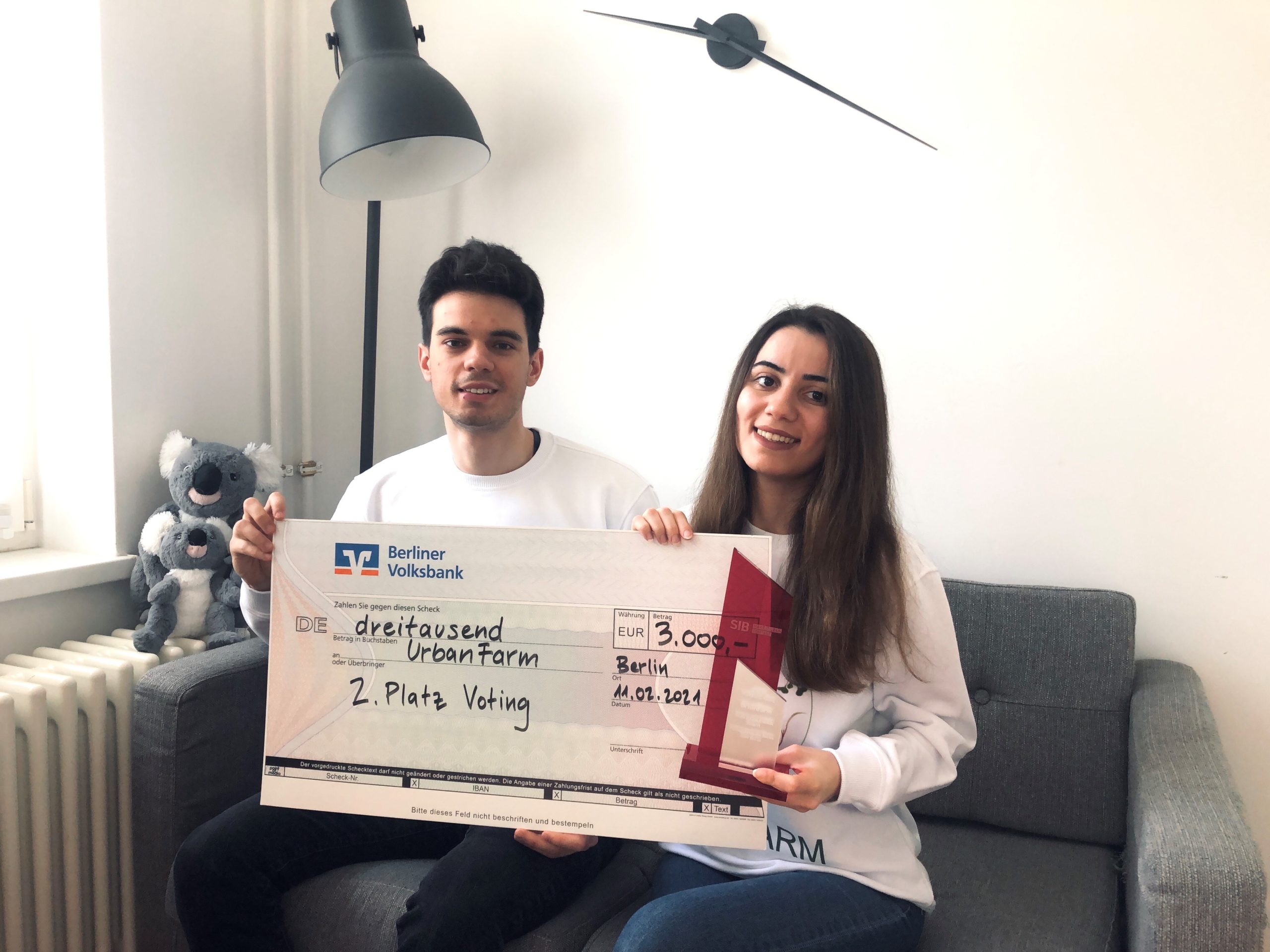
    UrbanFarm won the second place of the Make It Lean Contest 2020/21 and with that 3.000€ price money for their startup project.
    Their startup is an environmentally friendly, mobile production system for nutrient-rich microgreens that uses the recycling of food waste from restaurants for their own needs on site.
    As sustainability gets more and more important, UrbanFarms project is spot on. So we were curious, how did they came up with their idea and what are their plans for the future?

    1) How did you find out about the Make It Lean Contest?
    We came across the Make It Lean Contest while we were searching for support programs for startups.
    Then we thought that this contest would be a great chance to share our idea with a large audience and opportunity to get support by every means.

    2) How and when did you get together as a startup team?
    We got together around this idea in October 2020. We have already known each other for a while and both of us wanted to create value for the whole society then we started thinking.

    3) How did you come across the problem that you wanted to solve with your founding idea?
    We have always wished to find a solution for increasing demand for food. With the pandemic, this demand became more significant than ever.
    All of us -even in the big cities- felt the fear of not having enough food in the groceries to feed ourselves.
    Therefore we wanted to find a way to grow food for people in the cities in another manner creating self-sufficient cities. About recycling food waste, Ecem has seen the big issue how much food goes away everyday.
    Since she is a chemist, she proposed to use this food waste as a fertilizer and grow organic food without chemicals.

    4) What is your main goal in the next 3 months?
    We have already set up our prototype system and in the next three months our goal is to launch our operation and present our products in the market. We are currently working on that step by step.

    5) Who would you like to have a coffee or tea with? Why?
    Well, that’s a tough one. If he was alive, definitely Henry Ford. He had a great vision and much ahead of his time.

  • Careloop closes six-figure seed funding round

    Careloop closes six-figure seed funding round

    The Berlin-based Recruiting/Education Tech startup Careloop recruits nursing staff from abroad, thereby addressing the increasingly acute problem of the nursing shortage in Germany. In addition, it is developing an online academy for foreign nursing professionals that is unprecedented in Germany.

    In 2019, Careloop, then still known as Pflegista, joined the Startup Incubator Berlin (SIB). Through the Startup Now Programme, they worked on developing their business model and prototype. Following a successful application, they were admitted to the Berlin Startup Scholarship at the beginning of 2020, enabling them to launch their MVP and carry out their first recruiting processes. After this near-exemplary progression through the SIB’s funding programmes, Careloop was able to continue implementing their plans from the beginning of 2021 – and still has a number of goals for the future.

    The two Berlin-based founders Alexander Lundberg and Matti Fischer have now announced the successful completion of the first funding round for their company Careloop, founded in 2019. The investment, led by the Swiss Founders Fund (SFF), marks the beginning of the company’s next growth phase. A total of six prominent investors, including Mediengruppe Klambt, WestTech Ventures, HNC Capital, and angel investors, are participating in the investment round and thus supporting Careloop’s mission to address the nursing shortage in Germany.

    Careloop offers a solution from which both sides can benefit sustainably and quickly. Both foreign nursing professionals and German clinics and care facilities create a profile on an online platform. After the nursing professionals have been vetted with regard to their qualifications and language skills, German employers apply to them. The Reversed Recruiting Model works contrary to the standardised process in which applicants apply to companies. This candidate-centred approach by Careloop makes it as easy as possible for nursing professionals to integrate into the German healthcare system. Amid the coronavirus crisis, the startup’s early phase brought initial successes: in 2020, over 1,000 nursing professionals registered in just eight months, with the goal of over 3,000 registrations in 2021. In addition, more than 15 employers were acquired as clients.

    Careloop not only helps with the recruitment of nursing staff from abroad, but also with the onboarding of foreign nursing professionals at care facilities. The Careloop Academy enables foreign nursing professionals to make up for any gaps in their nursing training from their home country, regardless of location, and optimally prepares German employers for working with international nursing staff – all online and digitally. Experienced practitioners accompany its development – something that is so far unique in Germany.

  • Make It Lean Contest – Interview: Fainin (Partiri)

    Make It Lean Contest – Interview: Fainin (Partiri)

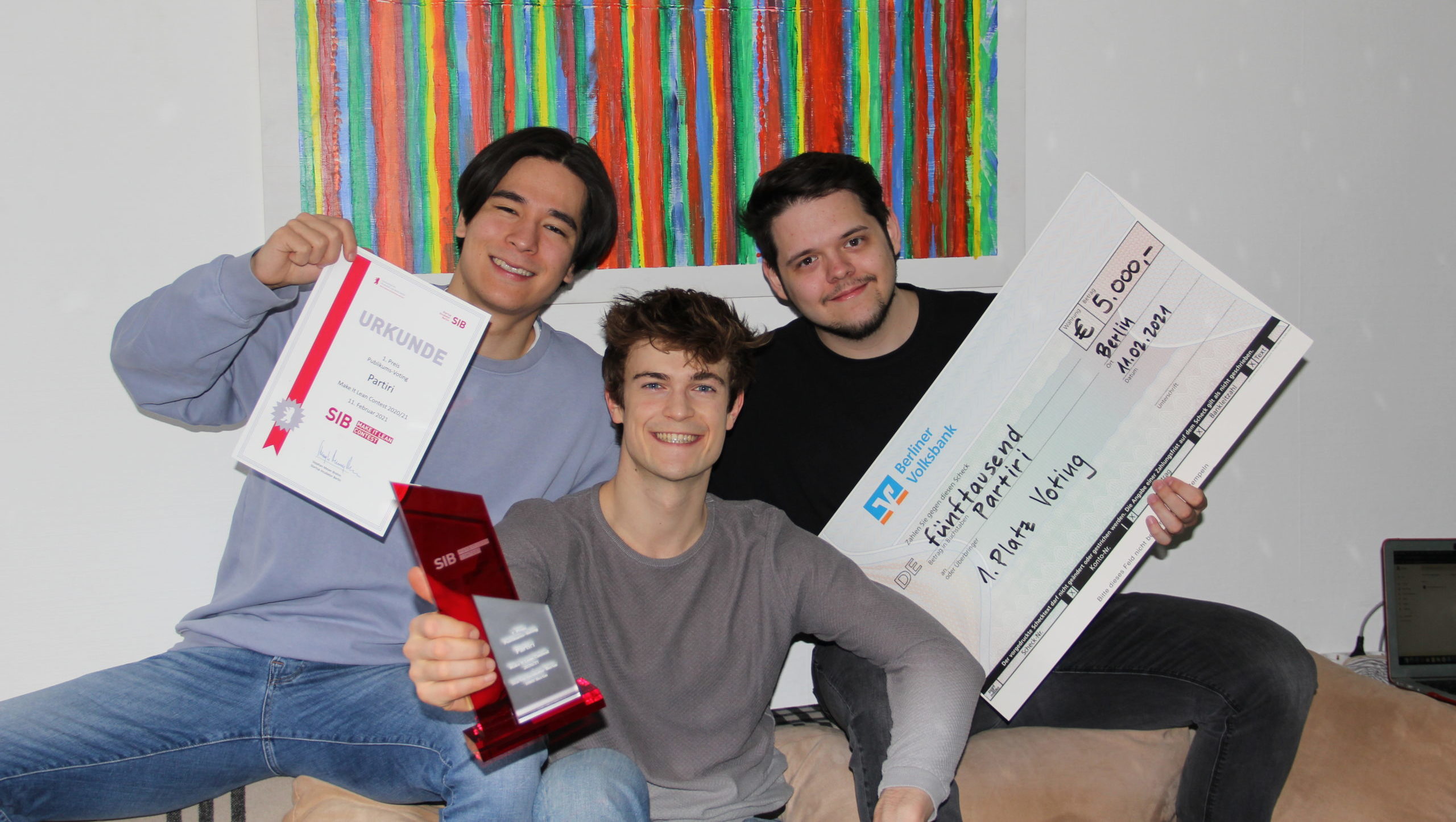
    As Partiri, they took 1st place in the Make It Lean Contest 2020/21 and won €5,000 for their startup.
    Their idea of a sharing platform for everyone willing to share items in order to promote sustainable consumption and protect the environment resonated with the founders of Fainin, who pursue the same goal. This led to a merger of the two sharing apps — Partiri is now operating as Fainin to continue driving their sustainable project forward.

    We find it exciting to watch teams evolve that have been or still are in contact with the Startup Incubator Berlin. Whether through one of our programs or at our founding competition, the Make It Lean Contest.
    That’s why we asked the Partiri/Fainin team a few more questions to learn more about the founders and their project:

    How did you become aware of the Make It Lean Contest?

    At the time, we participated in the Make It Lean Contest under the name of our former project “Partiri.App”. A friend from the Partiri family pointed us to several contests. Since we focus on a “lean” approach in our IT development and community roadmap, we identified with the competition right from the start. We also calculated our chances of winning to be high given our social, sustainable, and community-oriented business model.

    The MILC helped us far beyond the community boost and prize money: the founders of our biggest competitor “Fainin” took notice of us and offered to merge the two sharing apps. We can help them a great deal with community building and marketing, and we benefit from their existing partnerships — such as with insurance providers and payment service providers — as well as their IT infrastructure. True to the Partiri/Fainin principle: a win-win for everyone involved, because #SharingIsTheNewOwning.

    How and when did you come together as a startup team?

    We launched Partiri.App in November/December 2019. At the beginning we started with surveys and a business plan, but as the project progressed we kept learning continuously, and this summer we are also launching the app under the name “Fainin” – Find Anything In Your Neighbourhood.

    Johann and I (Max) know each other from our International Management studies — we had worked together as part of a course and together dreamed of the benefits of a secure sharing community. After we communicated our project a little within our social circle, we were introduced to our IT genius, Kevin. He identified strongly with our dream and was ultimately convinced by our business plan to come on board. Since that day we have grown closer and closer and have already become friends for life.
    We also each had the opportunity to write our respective bachelor’s/master’s theses about our project:

    1. “The Optimal Business Model in the Collaborative Industry” – Maximilian Lehmann
    2. “Acceptance Characteristics of Sharing Solutions” – Kevin Mattutat
    3. “Financing Options for Pre-Seed Platforms” – Johann Lißner

    The accumulated theoretical knowledge helped us to shape our sharing project as promisingly as possible. It is astounding how many books address the rise of the sharing economy and the advantages of collaborative approaches: for example, Jeremy Rifkin’s “The Zero Marginal Cost Society”, in which he describes how the Internet of Things and collaborative cooperation lead to a decline in global production costs. With this, he prophesies a reorientation of society in favor of a community-oriented society. A dream that truly connects all three of us deeply — with this conviction we gladly emphasize our motto #SharingIsTheNewOwning.

    How did you come across the problem that you want to solve with your startup idea?

    The idea came to me (Max) after moving from the 105-inhabitant village of “Metzenhausen” to Hamburg. I fell in love with the city immediately, but at first I missed the interpersonal closeness from my home in the Hunsrück region. I quickly identified one key reason for the lesser sense of connection: people in cities don’t know each other. In Metzenhausen, everyone knows everyone. That’s why people support each other. It’s completely normal for the Lehmann family to share things with all the neighbors — for example, the lawnmower and the party equipment for annual birthdays. This leads to communication and further strengthens trust.

    Fainin is meant to make exactly that possible all over the world. Creating trust within the sharing community through a secure and automated verification and lending system.”

    What is your most important goal in the next 3 months?

    We want to release Fainin’s application in a beta version in May 2021 and test and optimize our infrastructure with initial interactions. Fainin should become established within our circle of friends and be gradually completed with additional features. This way we can already kick off our community with a “soft launch” in the summer, and then establish the group function with a “hard launch” and optimized infrastructure. This is intended to be the starting shot for a cluster-like establishment of our network: initially, Fainin will position itself as a sharing network for students at universities, athletes in clubs, and neighbors in districts. This ensures that members have a common local connection and may even become friends through our interaction features.

    Who would you like to have a coffee or tea with? Why?

    We would love to have a coffee with Brian Chesky, Nathan Blecharczyk, and Joe Gebbia. They are the Airbnb founders that hardly anyone believed in at the start. They were told things like “The business model won’t work” or “Would you trust strangers?” But instead of letting that get them down, they simply kept going and realized their vision. We are very inspired by their determination and their belief in creating something big and positive for the world and everyone involved with their startup.
Cookie Consent Banner by Real Cookie Banner